Search
Home / Understanding the Factors Driving the Epidemic of Social Isolation and Loneliness among Older Canadians

Understanding the Factors Driving the Epidemic of Social Isolation and Loneliness among Older Canadians

Social isolation and loneliness are becoming increasingly recognized as significant public health concerns, particularly for older individuals, across Canada and around the world. With older persons making up a rapidly growing proportion of Canada’s population, the number of isolated or lonely older Canadians is expected to significantly increase, meaning that both the individual and societal consequences of loneliness and social isolation will likely also become more severe.

The report, Understanding the Factors Driving the Epidemic of Social Isolation and Loneliness Among Older Canadians, finds that as many as 41 per cent of Canadians aged 50 years and older are at risk of social isolation and up to 58 per cent have experienced loneliness before. To date, a lack of consistent definitions and measurement scales of loneliness and social isolation have made it challenging to fully characterize the scope of the problem in Canada, which could better enable measures to address it. Using data from the NIA’s inaugural 2022 Ageing in Canada Survey results, the report aims to fill this evidence gap by examining the extent to which both social isolation and loneliness are impacting Canadians aged 50 years and older across 10 provinces, and will continue to do so over the coming decade.
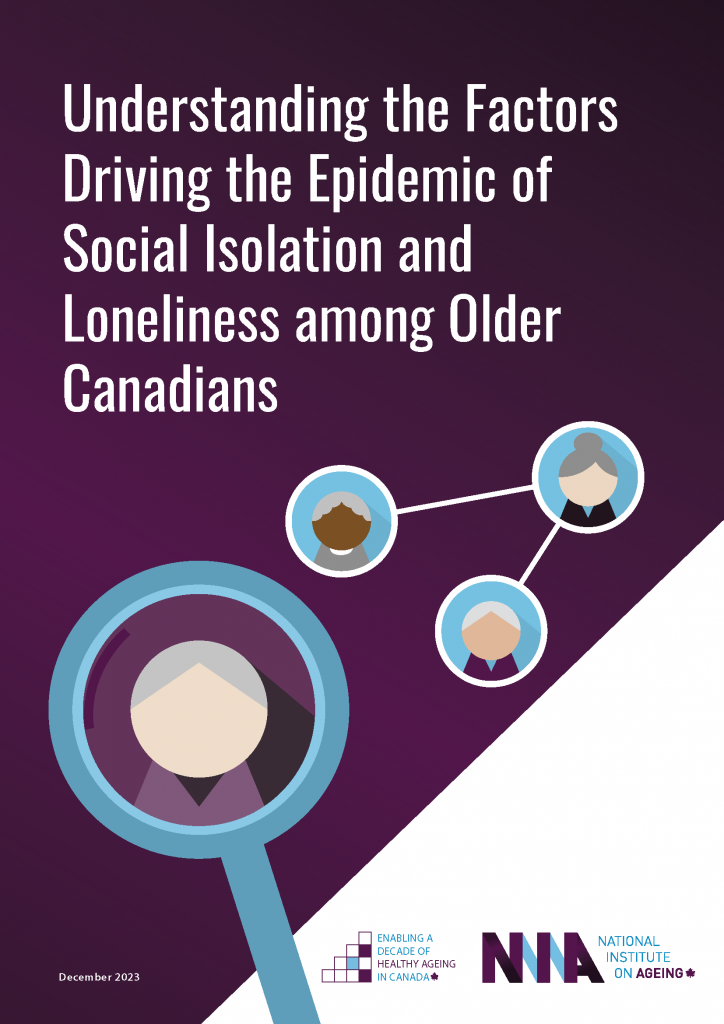
Understanding the Factors Driving the Epidemic of Social Isolation and Loneliness among Older Canadians report cover
Reports
September 28, 2026
IMPACT REPORT 2025/26: Building a 2025–2026 NIA Impact Report: A Year of Research, Action and Impact

Canada is now a super-aged nation, with one in five Canadians aged 65 and older. As the National Institute on Ageing (NIA) marks its 10th anniversary, our 2025–2026 Impact Report highlights how the NIA is helping Canada respond to this demographic shift through evidence-informed research, policy leadership, collaboration and public engagement.  2025-2026 Impact Report Over […]

More Info
Addressing Dementia in Canada: The Current State, Challenges and Opportunities for Improving Care for People Living with Dementia
Reports
September 23, 2026
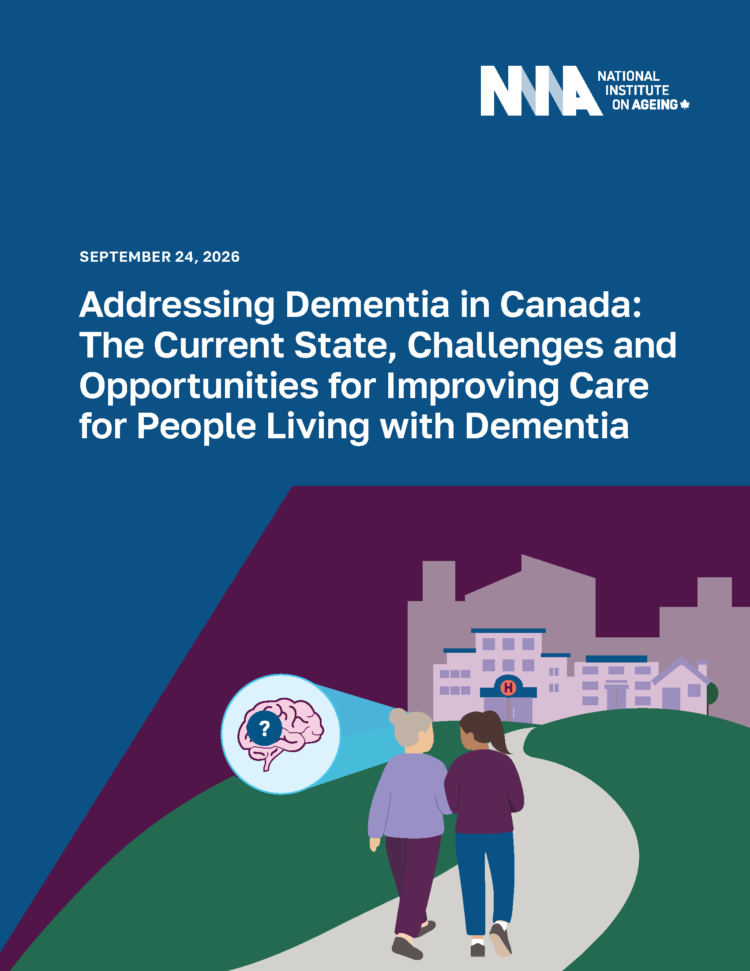
Addressing Dementia in Canada: The Current State, Challenges and Opportunities for Improving Care for People Living with Dementia

A new report from the National Institute on Ageing (NIA) is calling for a more coordinated approach to dementia care to ensure Canadians living with dementia and their caregivers can access high-quality care and support, no matter where they live. Addressing Dementia in Canada: The Current State, Challenges and Opportunities for Improving Care for People […]

More Info
Reports
September 23, 2026
Pre-Budget Submission to the Department of Finance

The NIA has released its latest pre-budget submission to the Department of Finance in advance of Budget 2026. The submission outlines seven recommendations to help ensure Canada’s policies and programs better support the needs of our ageing population. The NIA recommends the federal government: Together, these recommendations address financial security, disability supports, caregiving, community-based services, responsible AI […]

More Info