Search
Home / Addressing Dementia in Canada: The Current State, Challenges and Opportunities for Improving Care for People Living with Dementia

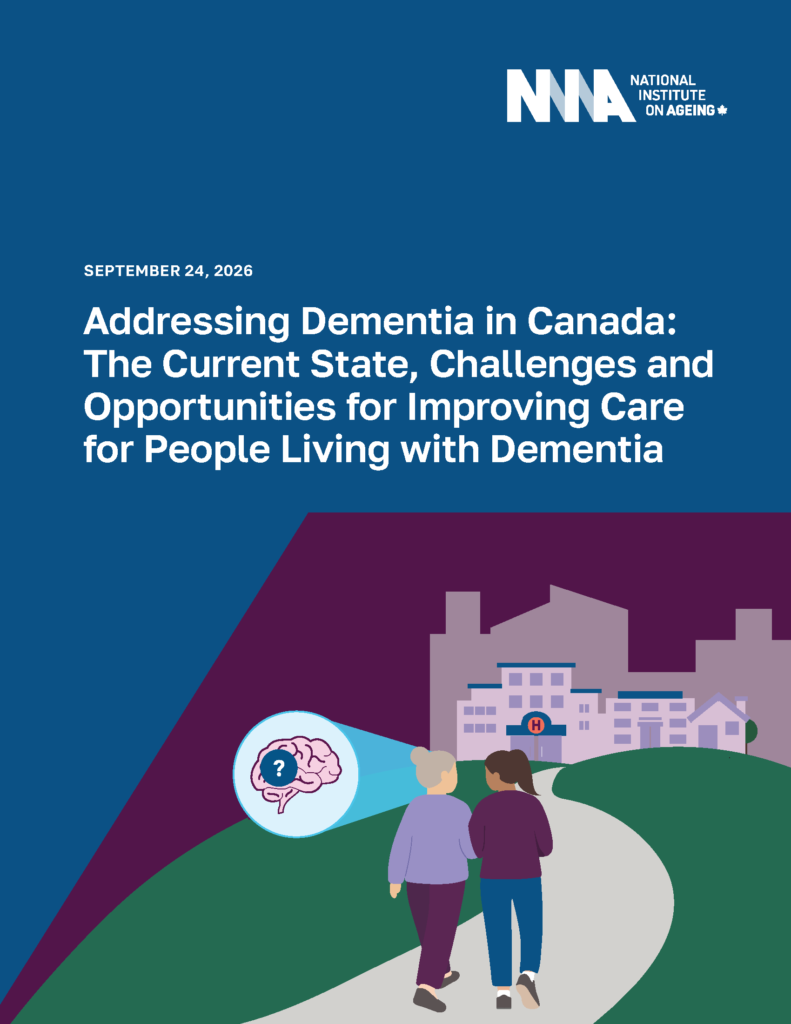
Addressing Dementia in Canada: The Current State, Challenges and Opportunities for Improving Care for People Living with Dementia

A new report from the National Institute on Ageing (NIA) is calling for a more coordinated approach to dementia care to ensure Canadians living with dementia and their caregivers can access high-quality care and support, no matter where they live.

Addressing Dementia in Canada: The Current State, Challenges and Opportunities for Improving Care for People Living with Dementia is the second report in the NIA’s three-year annual series examining the state of dementia in Canada. The report highlights persistent challenges, including delays in diagnosis, gaps in primary care capacity, inconsistent post-diagnostic supports, poorly coordinated care and barriers to equitable and culturally safe care.

An estimated 772,000 Canadians are currently living with dementia, although the actual number may be considerably higher. Globally, nearly two-thirds (61.7%) of people living with dementia are undiagnosed, suggesting that as many as 2 million people in Canada could be living with dementia today. These figures underscore the importance of helping Canadians recognize concerning changes, seek answers sooner and ensuring the health care system is equipped to provide the support they need.

To strengthen dementia care across Canada, the NIA identifies four priorities: establishing national dementia care standards, better enabling and supporting care providers, improving equitable and inclusive care, and creating common metrics to measure progress across provincial and territorial dementia care systems.
Addressing Dementia in Canada: The Current State, Challenges and Opportunities for Improving Care for People Living with Dementia
Reports
September 23, 2026
Pre-Budget Submission to the Department of Finance

The NIA has released its latest pre-budget submission to the Department of Finance in advance of Budget 2026. The submission outlines seven recommendations to help ensure Canada’s policies and programs better support the needs of our ageing population. The NIA recommends the federal government: Together, these recommendations address financial security, disability supports, caregiving, community-based services, responsible AI […]

More Info
Reports
September 14, 2026
National Institute on Ageing Submission on the Proposed Disability Tax Credit Amendment

The NIA is calling on the federal government to reduce the administrative, financial and eligibility barriers that can prevent older adults with disabilities from accessing the support they need. Recommendations include adopting a broader definition of disability, simplifying the application process, eliminating unnecessary reassessments, expanding the health professionals who can certify applications, and enabling supported […]

More Info
The first page of National Institute on Ageing Submission on the Consumer-Driven Banking Framework
Reports
August 27, 2026
National Institute on Ageing Submission on the Consumer-Driven Banking Framework

As Canadians increasingly turn to digital financial services, protecting the security and privacy of their financial information is more important than ever. In a submission to the Department of Finance Canada, the National Institute on Ageing (NIA) has provided feedback on proposed Consumer-Driven Banking Regulations under the Consumer-Driven Banking Act. The NIA highlights the risks […]

More Info