Search
Home / Understanding the Factors Driving the Epidemic of Social Isolation and Loneliness among Older Canadians

Understanding the Factors Driving the Epidemic of Social Isolation and Loneliness among Older Canadians

Social isolation and loneliness are becoming increasingly recognized as significant public health concerns, particularly for older individuals, across Canada and around the world. With older persons making up a rapidly growing proportion of Canada’s population, the number of isolated or lonely older Canadians is expected to significantly increase, meaning that both the individual and societal consequences of loneliness and social isolation will likely also become more severe.

The report, Understanding the Factors Driving the Epidemic of Social Isolation and Loneliness Among Older Canadians, finds that as many as 41 per cent of Canadians aged 50 years and older are at risk of social isolation and up to 58 per cent have experienced loneliness before. To date, a lack of consistent definitions and measurement scales of loneliness and social isolation have made it challenging to fully characterize the scope of the problem in Canada, which could better enable measures to address it. Using data from the NIA’s inaugural 2022 Ageing in Canada Survey results, the report aims to fill this evidence gap by examining the extent to which both social isolation and loneliness are impacting Canadians aged 50 years and older across 10 provinces, and will continue to do so over the coming decade.
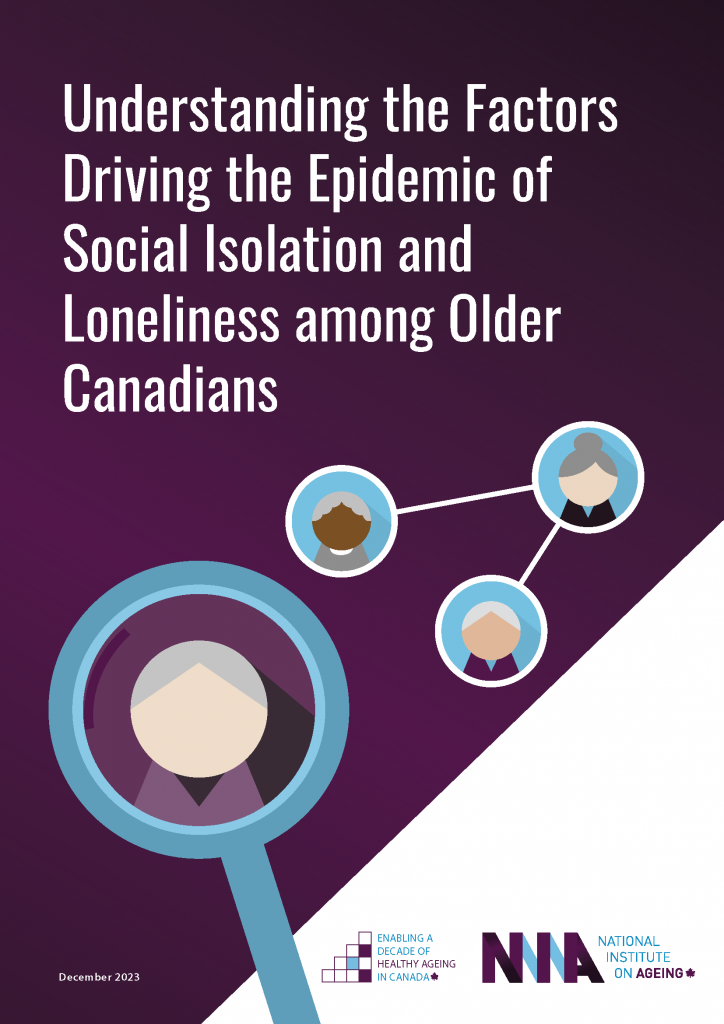
Understanding the Factors Driving the Epidemic of Social Isolation and Loneliness among Older Canadians report cover
Reports
September 14, 2026
National Institute on Ageing Submission on the Proposed Disability Tax Credit Amendment

The NIA is calling on the federal government to reduce the administrative, financial and eligibility barriers that can prevent older adults with disabilities from accessing the support they need. Recommendations include adopting a broader definition of disability, simplifying the application process, eliminating unnecessary reassessments, expanding the health professionals who can certify applications, and enabling supported […]

More Info
The first page of National Institute on Ageing Submission on the Consumer-Driven Banking Framework
Reports
August 27, 2026
National Institute on Ageing Submission on the Consumer-Driven Banking Framework

As Canadians increasingly turn to digital financial services, protecting the security and privacy of their financial information is more important than ever. In a submission to the Department of Finance Canada, the National Institute on Ageing (NIA) has provided feedback on proposed Consumer-Driven Banking Regulations under the Consumer-Driven Banking Act. The NIA highlights the risks […]

More Info
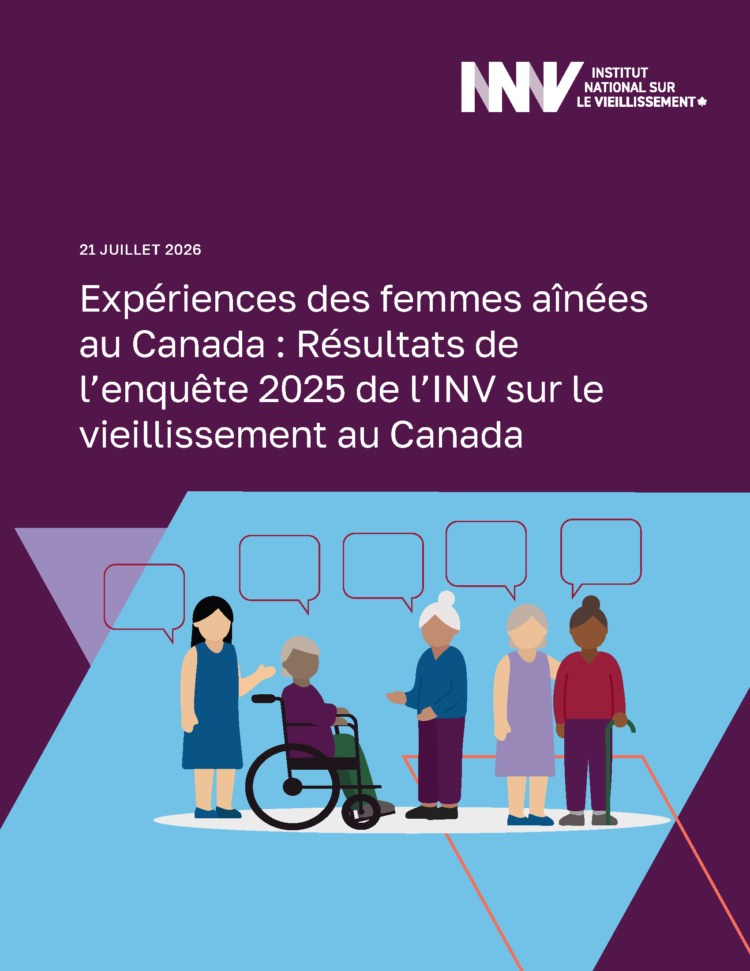
WAGE Report French cover
Reports
July 21, 2026
Expériences des femmes aînées au Canada : résultats de l’enquête 2025 de l’INV sur le vieillissement au Canada

Au Canada, les femmes aînées vivent plus longtemps que les hommes, mais beaucoup d’entre elles vieillissent dans un contexte de plus grande précarité financière, de solitude et d’âgisme, selon un nouveau rapport publié aujourd’hui par l’Institut national sur le vieillissement (INV) en partenariat avec l’International Longevity Centre Canada (ILC Canada). Soutenu par Femmes et Égalité […]

More Info