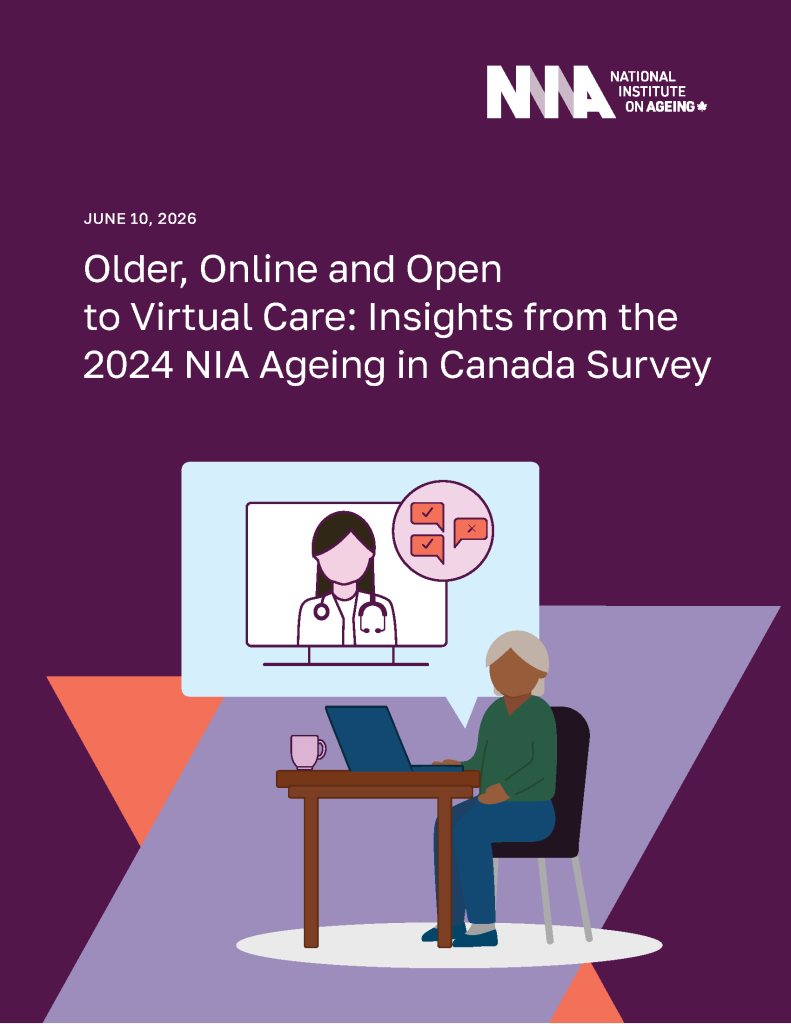
Older, Online and Open to Virtual Care: Insights from the 2024 NIA Ageing in Canada Survey
In Older, Online and Open to Virtual Care: Insights from the 2024 NIA Ageing in Canada Survey, findings show that more than half (51%) of Canadians aged 50 and older have used virtual care at least once, challenging long-standing assumptions about older adults and technology. Usage also increases with age, with those 80 and older among the most likely to report using it. While this points to strong uptake among older Canadians, the report notes that the survey was conducted online, which may have captured a group more comfortable with digital tools.
Overall, experiences are largely positive. Among those who have used virtual care, 93% say their needs were fully or mostly met, indicating high levels of satisfaction. However, interest among those who have never used virtual care remains mixed, with only 37% saying they would be likely to use it in the future, highlighting ongoing hesitation and persistent barriers to broader adoption.
Key Findings
- Older Canadians are engaging with virtual care: Usage increases with age, with Canadians aged 80+ the most likely to report using these services.
- Experiences are largely positive: Among those who used virtual care, 93% said their needs were fully or mostly met, indicating strong overall satisfaction.
- Interest among non-users remains mixed: Only 37% of those who have never used virtual care say they are likely to use it in the future, suggesting ongoing hesitation and barriers.
- Equity gaps persist: Canadians with lower incomes are less likely to use virtual care, less satisfied when they do and are more hesitant to try it in the future.
- Virtual care is not a one-size-fits-all solution: Many older adults report limitations, including difficulty communicating symptoms and the inability to receive physical examinations, highlighting the need for hybrid models of care.