Search
Home / Understanding the Factors Driving the Epidemic of Social Isolation and Loneliness among Older Canadians

Understanding the Factors Driving the Epidemic of Social Isolation and Loneliness among Older Canadians

Social isolation and loneliness are becoming increasingly recognized as significant public health concerns, particularly for older individuals, across Canada and around the world. With older persons making up a rapidly growing proportion of Canada’s population, the number of isolated or lonely older Canadians is expected to significantly increase, meaning that both the individual and societal consequences of loneliness and social isolation will likely also become more severe.

The report, Understanding the Factors Driving the Epidemic of Social Isolation and Loneliness Among Older Canadians, finds that as many as 41 per cent of Canadians aged 50 years and older are at risk of social isolation and up to 58 per cent have experienced loneliness before. To date, a lack of consistent definitions and measurement scales of loneliness and social isolation have made it challenging to fully characterize the scope of the problem in Canada, which could better enable measures to address it. Using data from the NIA’s inaugural 2022 Ageing in Canada Survey results, the report aims to fill this evidence gap by examining the extent to which both social isolation and loneliness are impacting Canadians aged 50 years and older across 10 provinces, and will continue to do so over the coming decade.
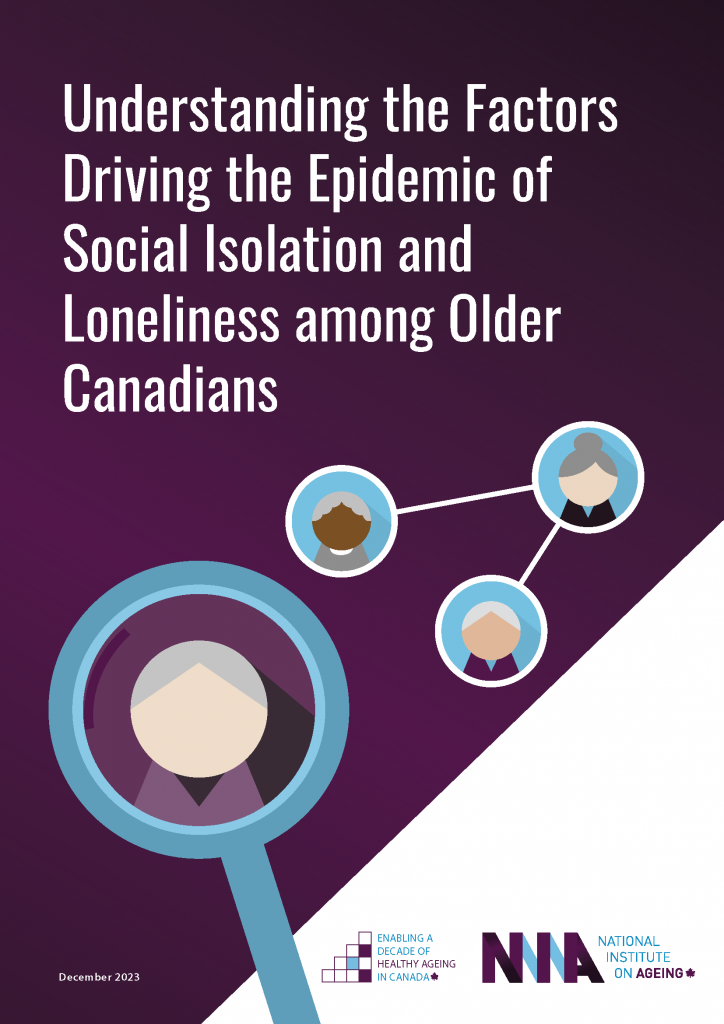
Understanding the Factors Driving the Epidemic of Social Isolation and Loneliness among Older Canadians report cover
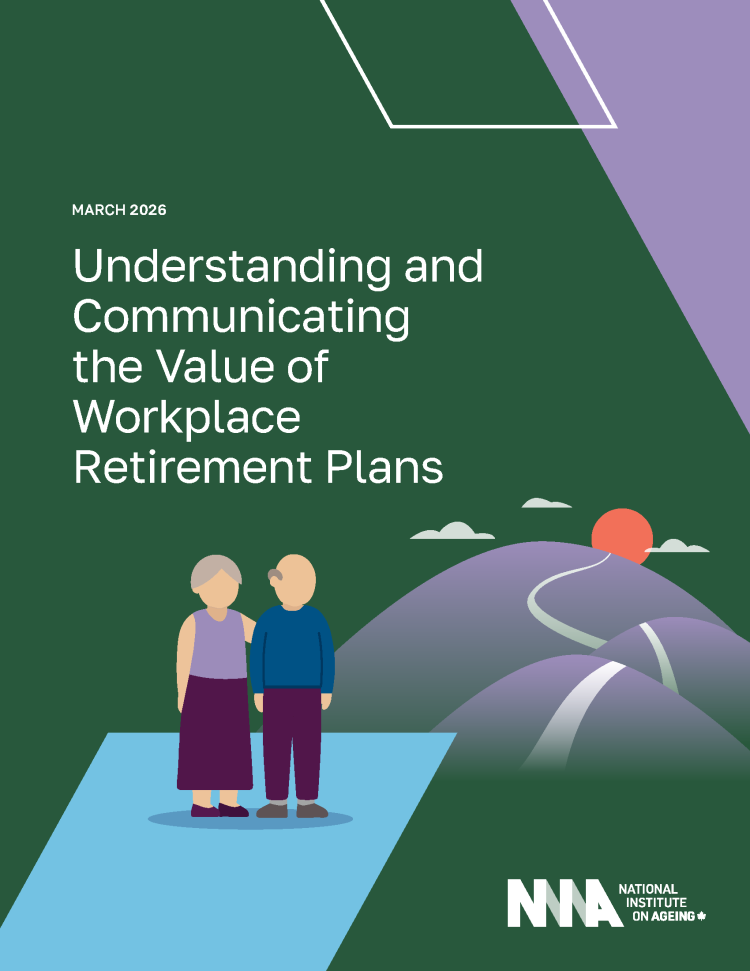
Report cover for Understanding and Communicating the Value of Workplace Retirement Plans
Reports
March 05, 2026
Understanding and Communicating the Value of Workplace Retirement Plans

A new report from the Pension Centre of Excellence at the National Institute on Ageing (NIA) tackles how to help Canadian workers better understand and appreciate one of the most important components of their long-term financial security: their workplace retirement plans. As Canada reflects on the conversations sparked during National Pension Awareness Week, Understanding and […]

More Info
Cover of submission on Bill C-16
Reports
February 25, 2026
National Institute on Ageing Submission to JUST for its Study of Bill C-16

Bill C-16, the Protecting Victims Act, proposes a standalone coercive control offence within intimate partner relationships. Coercive control is a pattern of gradual, escalating abuse that creates fear, anxiety, and dependency, eventually undermining an individual’s sense of autonomy and personhood. While this is an important step forward, in its written submission on Bill C-16, the […]

More Info
Cover of the NIA's 2026 Shingles report: The Overlooked Issue of Shingles Infections in Older Canadians, and How to Address It
Reports
February 24, 2026
The Overlooked Issue of Shingles Infections in Older Canadians and How to Address It. (2026)

As Canada marks National Shingles Awareness Week, the National Institute on Ageing (NIA) is releasing a new report warning that shingles remains a largely overlooked yet preventable health risk for older Canadians.  Shingles infections continue to cause unnecessary pain and long-term complications for individuals and avoidable strain on Canada’s health care system. Canada’s National Advisory […]

More Info