Search
Home / Steps #5 & #6: Improving Long-term Financial Decision-making by Bridging the Psychological Divide Between Today and Tomorrow

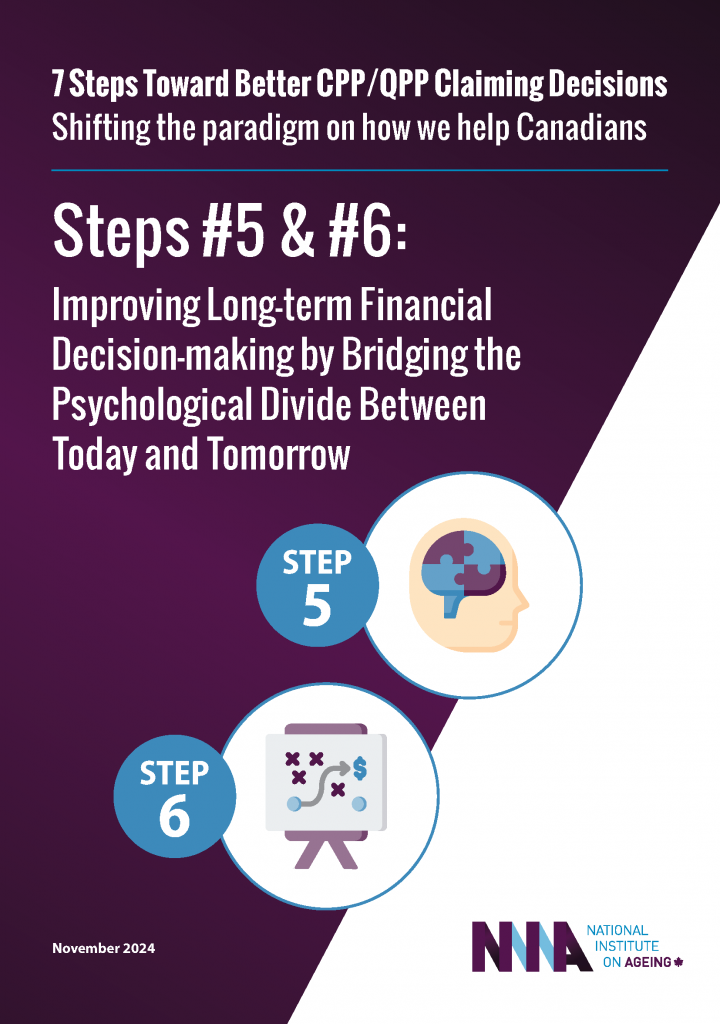
Steps #5 & #6: Improving Long-term Financial Decision-making by Bridging the Psychological Divide Between Today and Tomorrow

Steps 5 and 6 of the eight-part paper series, Improving Long-term Financial Decision-making by Bridging the Psychological Divide Between Today and Tomorrow, delve into the psychological factors that often prompt Canadians to start their pension benefits earlier than necessary: a choice that can significantly reduce their financial security in later years.

This latest paper addresses the cognitive and behavioural hurdles that contribute to a “present bias”: the natural tendency to prioritize immediate needs over long-term benefits. This bias can lead to hasty decisions that fail to consider the vulnerabilities many Canadians experience in later years. Building on previous report findings, this segment offers practical strategies to help retirees overcome these factors and make informed decisions about delaying benefits, ultimately enabling them to secure larger, inflation-protected incomes throughout their retirement.
Report cover for Understanding and Communicating the Value of Workplace Retirement Plans
Reports
March 05, 2026
Understanding and Communicating the Value of Workplace Retirement Plans

A new report from the Pension Centre of Excellence at the National Institute on Ageing (NIA) tackles how to help Canadian workers better understand and appreciate one of the most important components of their long-term financial security: their workplace retirement plans. As Canada reflects on the conversations sparked during National Pension Awareness Week, Understanding and […]

More Info
Cover of submission on Bill C-16
Reports
February 25, 2026
National Institute on Ageing Submission to JUST for its Study of Bill C-16

Bill C-16, the Protecting Victims Act, proposes a standalone coercive control offence within intimate partner relationships. Coercive control is a pattern of gradual, escalating abuse that creates fear, anxiety, and dependency, eventually undermining an individual’s sense of autonomy and personhood. While this is an important step forward, in its written submission on Bill C-16, the […]

More Info
Cover of the NIA's 2026 Shingles report: The Overlooked Issue of Shingles Infections in Older Canadians, and How to Address It
Reports
February 24, 2026
The Overlooked Issue of Shingles Infections in Older Canadians and How to Address It. (2026)

As Canada marks National Shingles Awareness Week, the National Institute on Ageing (NIA) is releasing a new report warning that shingles remains a largely overlooked yet preventable health risk for older Canadians.  Shingles infections continue to cause unnecessary pain and long-term complications for individuals and avoidable strain on Canada’s health care system. Canada’s National Advisory […]

More Info