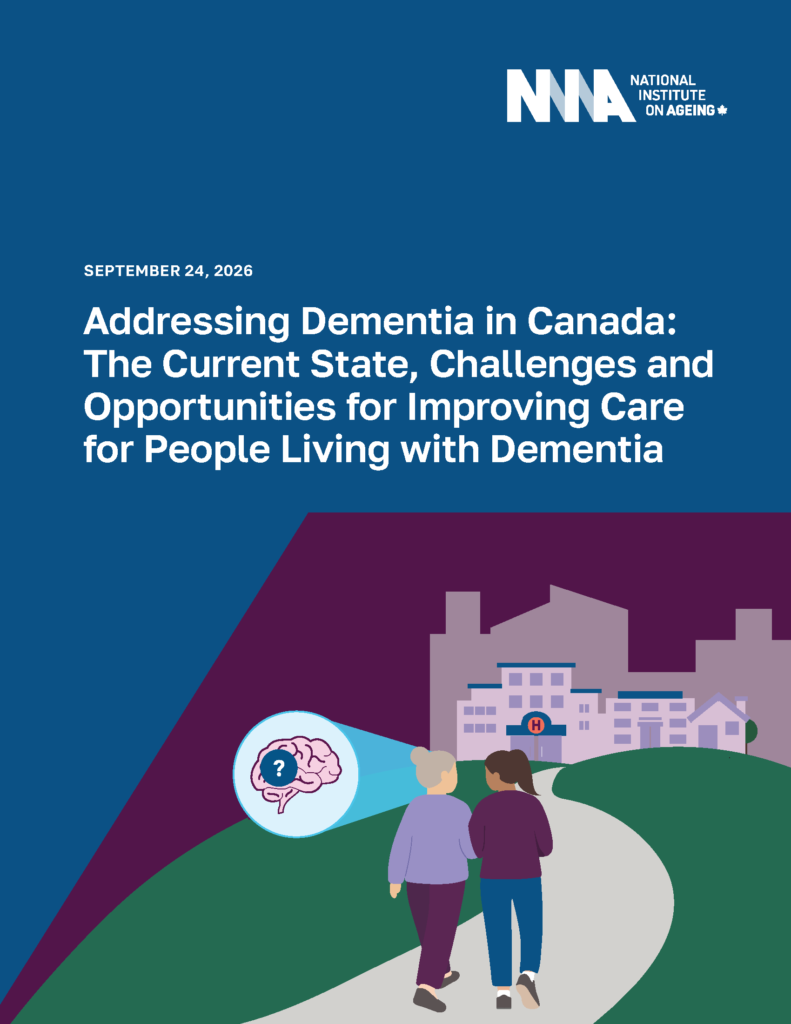
Addressing Dementia in Canada: The Current State, Challenges and Opportunities for Improving Care for People Living with Dementia
A new report from the National Institute on Ageing (NIA) is calling for a more coordinated approach to dementia care to ensure Canadians living with dementia and their caregivers can access high-quality care and support, no matter where they live.
Addressing Dementia in Canada: The Current State, Challenges and Opportunities for Improving Care for People Living with Dementia is the second report in the NIA’s three-year annual series examining the state of dementia in Canada. The report highlights persistent challenges, including delays in diagnosis, gaps in primary care capacity, inconsistent post-diagnostic supports, poorly coordinated care and barriers to equitable and culturally safe care.
An estimated 772,000 Canadians are currently living with dementia, although the actual number may be considerably higher. Globally, nearly two-thirds (61.7%) of people living with dementia are undiagnosed, suggesting that as many as 2 million people in Canada could be living with dementia today. These figures underscore the importance of helping Canadians recognize concerning changes, seek answers sooner and ensuring the health care system is equipped to provide the support they need.
To strengthen dementia care across Canada, the NIA identifies four priorities: establishing national dementia care standards, better enabling and supporting care providers, improving equitable and inclusive care, and creating common metrics to measure progress across provincial and territorial dementia care systems.